

- By shoulder
- 2026年5月18日
- 0 Comment
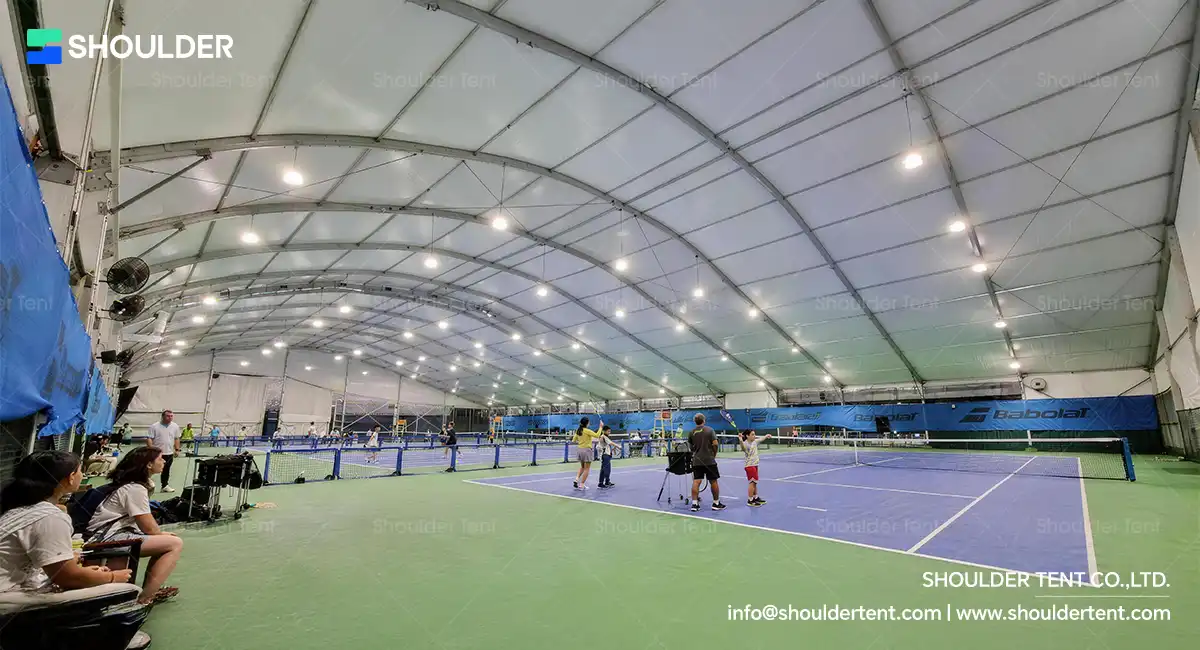
Case Study: The Pure Aluminum Neo Tennis Arena in Indonesia
When developing indoor sports facilities in Southeast Asia, the biggest hurdle isn’t the site size—it’s the extreme weather. Constant high temperatures, heavy rainfall, and intense humidity demand exceptional weather resistance and efficient construction timelines.
“ Let's break down the Neo Tennis Arena project in Indonesia from an engineering and project management perspective. Featuring two 37x65x6.4m units, this case study demonstrates how a high-end tennis tent solution balances professional athletic space with rapid commercial deployment."
Project Specs
Location: Indonesia
Application: Professional Indoor Tennis Club
Dimensions: 37m (Clear span) x 65m (Length) x 6.4m (Eave height)
Scale: 2 independent facilities, over 4,800 sqm total
Core Material: High-strength pure aluminum alloy
1. Spatial Breakdown: Why 37x65x6.4m?
For a professional indoor tennis tent facility, spatial design dictates the athletic experience. These dimensions were calculated to maximize usability:
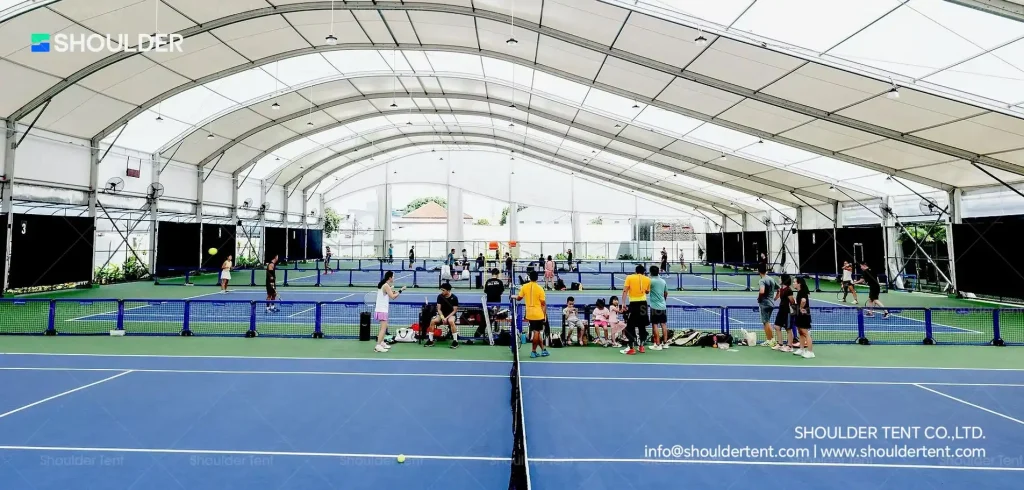
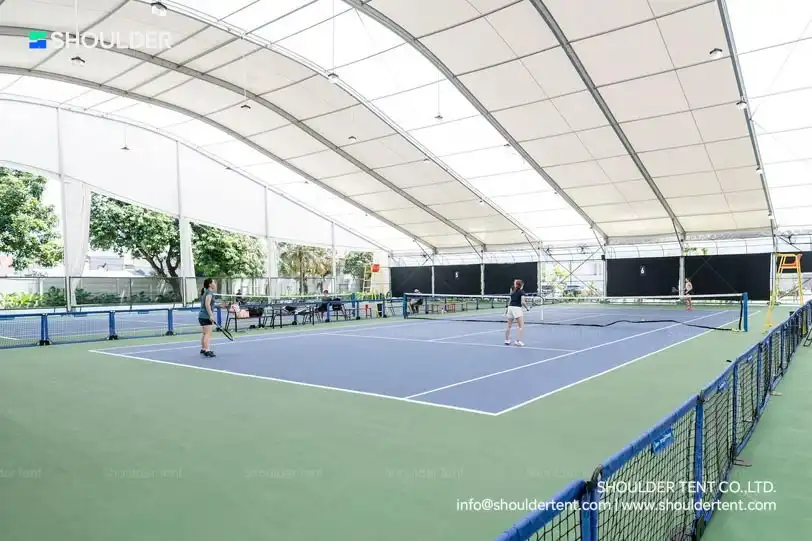
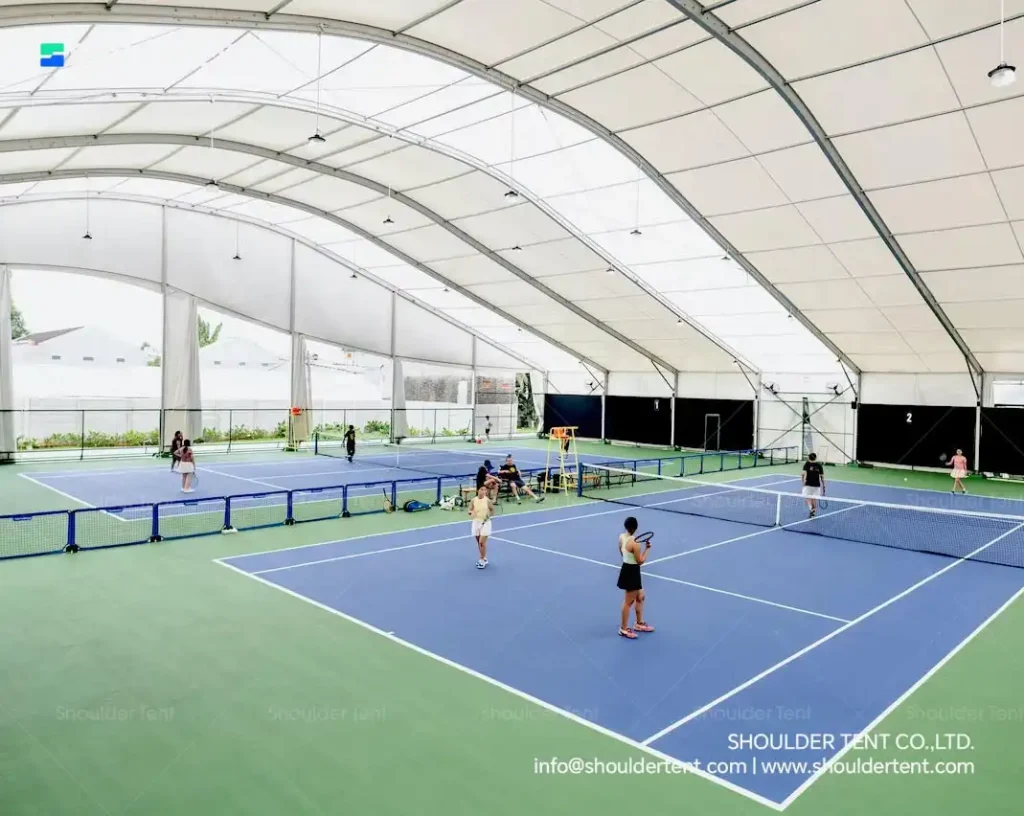
37m Clear Span: Tennis requires an unobstructed line of sight. Our structural framework utilizes a zero-interior-column design. A 37-meter clear span perfectly accommodates standard tennis tent courts side-by-side without any internal structural interference.
6.4m Eave Height: Buyers searching for a reliable tennis tent often overlook the height parameter. A 6.4m eave height, combined with the roof pitch, provides the essential vertical clearance for high lob shots. It meets professional tournament standards and prevents the interior from feeling claustrophobic.
Dual-Facility Layout: Building two modular units simultaneously allowed the client to instantly scale their operational capacity and handle higher foot traffic.
2. Material Engineering: Surviving High Humidity
In Indonesia’s tropical rainforest climate, corrosion resistance is the absolute priority for any building project.
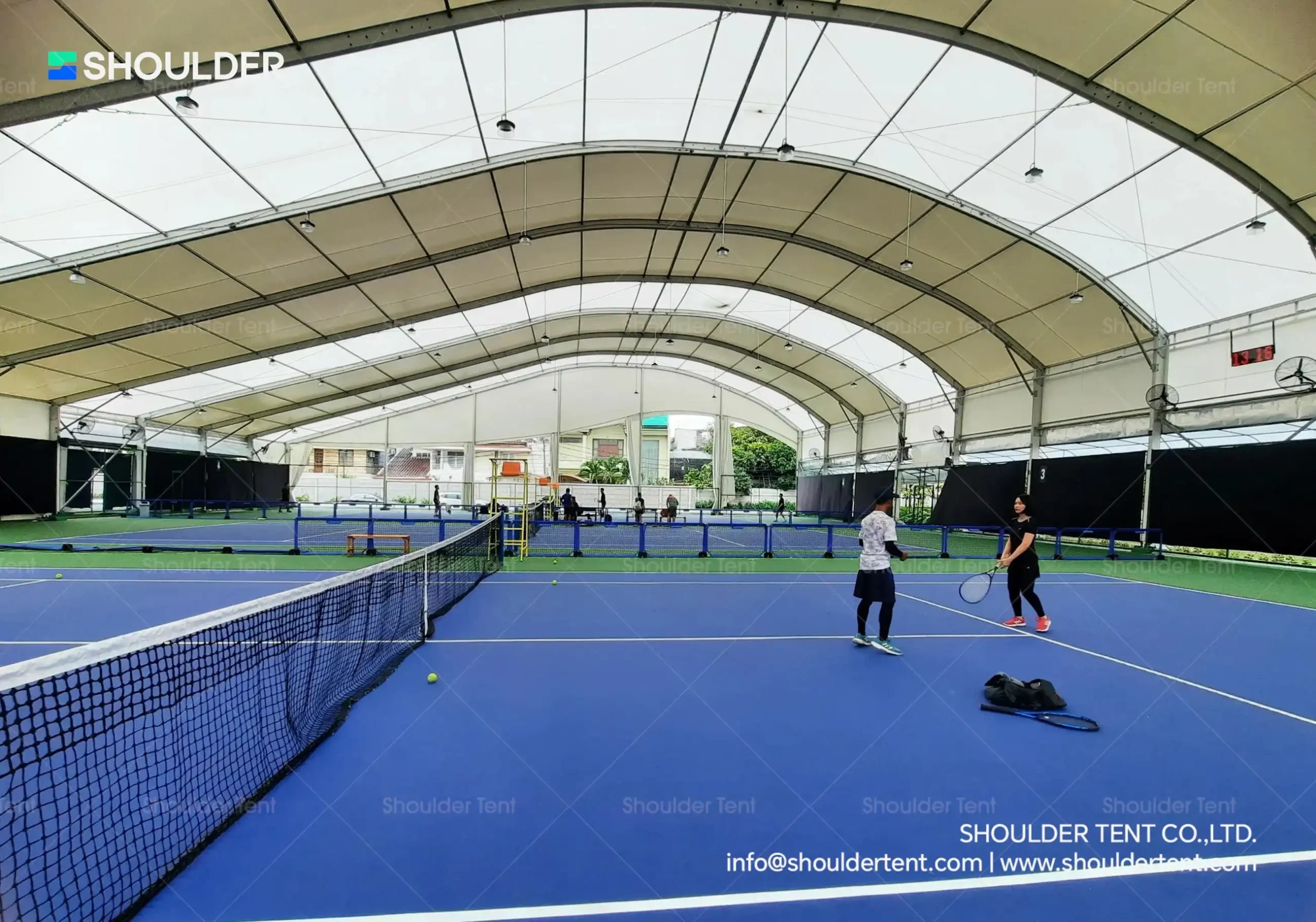
The Neo Tennis Arena functions as a durable, semi-permanent architectural structure because the main framework is manufactured entirely from high-strength pure aluminum alloy. Unlike other common building metals that quickly degrade in high humidity, aluminum naturally forms a dense, protective oxide layer.
Zero Corrosion Risk: The frame will not rust, even under Indonesia’s constant humidity and monsoon seasons. This eliminates the nightmare of constant structural maintenance.
Decades of Durability: The pure aluminum profile guarantees the facility remains a secure, long-term commercial asset.
Paired with heavy-duty, tensioned PVC roof covers, the arena maintains a completely dry internal environment, guaranteeing all-weather operation for the club.
3. Business Efficiency: Speed to Market
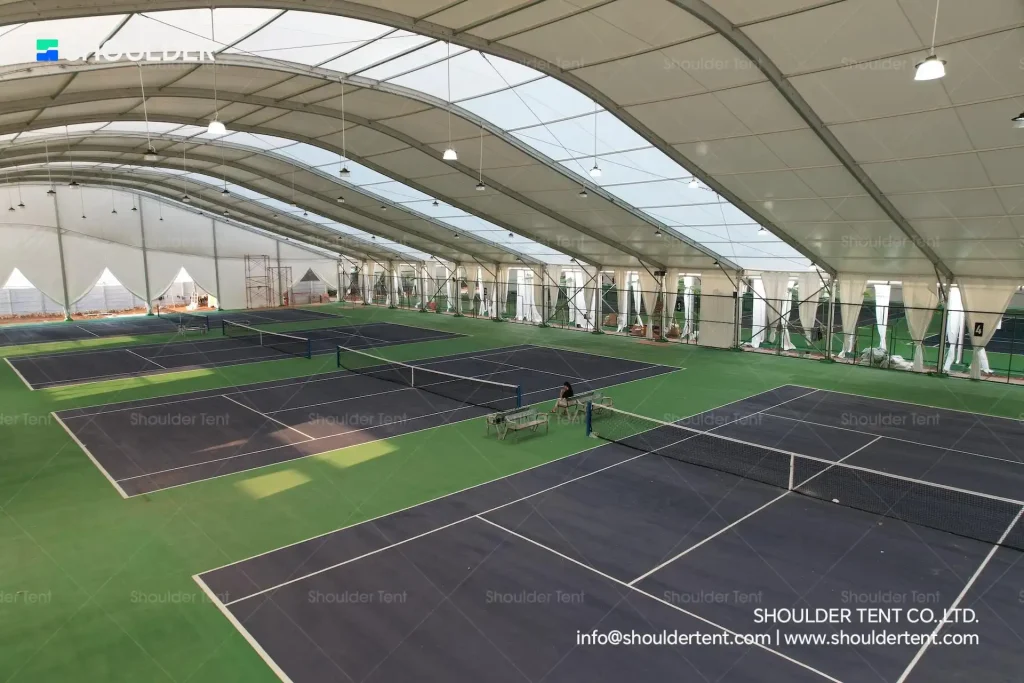
Minimal Groundwork: The structure requires minimal excavation compared to traditional deep foundations, saving immense prep time.
Rapid Deployment: All pure aluminum components are pre-fabricated in the factory. Once shipped to the site in Indonesia, the modular system is bolted together quickly and precisely.
Faster Cash Flow: The project moved from manufacturing to final handover in a fraction of the time a traditional build would require. This drastically shortens the time-to-market, allowing the business to open its doors and generate revenue months ahead of schedule.
Are you planning your next commercial sports facility project? Whether your project is located in Southeast Asia or anywhere else in the world, we invite you to contact our engineering team at +1 (747) 203-9635. Based on pure aluminum tent structure solutions, we will provide you with a customized spatial layout design and a detailed B2B procurement quotation.